


The Impossible Question
If I handed you an apple and an orange and asked, “Which one is better?”—what would you say?
You’d likely say the question itself is flawed. The apple has its crunch; the orange has its tang. You can’t judge an orange for its lack of Vitamin A any more than you can judge an apple for not being citrus. In fact, if we spent our lives trying to make an apple taste like an orange, we’d be called foolish.
Yet, as parents, we do this every single day with our children.
The Divine Law of Uniqueness
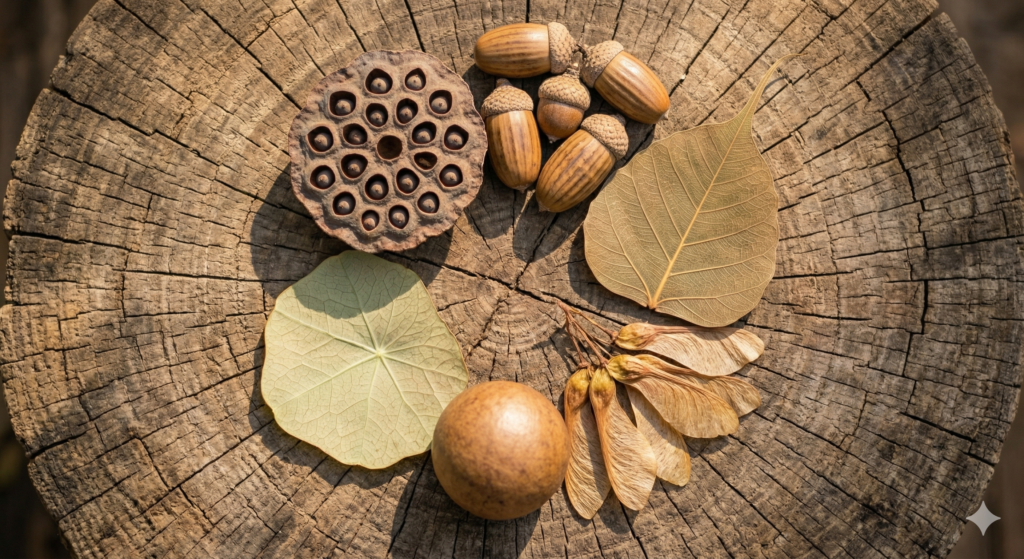
In this vast universe, nature never repeats itself. Every leaf, every fingerprint, and every soul is a unique creation of the Divine. When we look at the natural world, we admire diversity. We don’t ask the rose why it isn’t a lotus.
But the moment we step into a parent-teacher meeting or a social gathering, we forget this law. We start the “Comparison Game”:
- “See that guy? He scored more than you.”
- “Look at her, she stood first rank.”
When we do this, we aren’t seeing our child’s ability. We are trying to “import” someone else’s ability and force it into our child’s life.
Wisdom from the Puranas: The Race for the Fruit
Even the Heavens celebrate uniqueness. Remember the race between Ganesha and Kartikeya for the Fruit of Knowledge?
Kartikeya immediately jumped on his peacock, flying across the globe using his strength and speed. Ganesha looked at his heavy body and his slow-moving mount, the mouse. He knew he could never beat Kartikeya at his own game.
Instead of feeling “lesser” or trying to imitate his brother, Ganesha used his own unique wisdom. He simply walked around his parents, Lord Shiva and Goddess Parvati, three times, explaining that for a child, the parents are the entire world.

Lord Shiva didn’t tell Ganesha, “Why can’t you be fast like your brother?” He recognized Ganesha’s unique brilliance. When we compare our children, we are essentially telling Ganesha he should have been a racer, or telling Kartikeya he should have stayed still. We rob them of their own “Divine Fruit” of success.
What We Lose When We Compare
When we bring someone else’s yardstick to measure our child, we are literally ruining their life.
- Emotional Damage: You are building a mountain of stress, low self-esteem, and a lack of confidence.
- Stunted Growth: If you compare from childhood, their cognitive development is affected. It leads to an inability to think clearly or take independent decisions because they are always looking for external validation.
- The Wall of Silence: If you don’t connect with them, they stop expressing themselves. They live in constant fear of what parents will think, hiding their problems until it causes deep mental and physical damage.
Lessons from the Icons
We often demand that our children be “all-rounders.” But let’s look at the geniuses we admire:
- Srinivasa Ramanujan: He failed other subjects because his mind belonged to Mathematics. Would you call him a failure? No!
- Sachin & Kohli: They are masters of the bat, but they didn’t excel at bowling. They found one area, excelled in it, and made it their life.

Children should not be experts in everything. They just need to be encouraged toward their own specific “calling.”
The Raising Roots Way: Connection Over Comparison
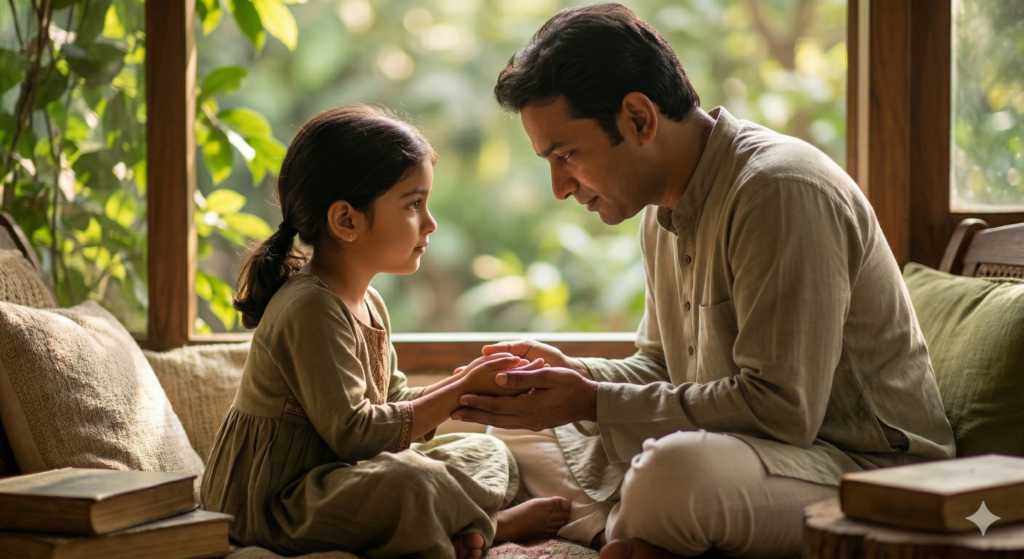
At Raising Roots, we believe every child is a unique seed with its own destiny. To find the best in them, we must:
- Connect, Don’t Command: Understand their struggles and preferences.
- Respect the Struggle: If they don’t express themselves, it’s because they don’t feel safe. Create a space where they don’t have to “hide” to be loved.
- Celebrate the Orange: If you have an orange, don’t pray for an apple. Find the “juice” within your own child.
The Final Root
Our children are Jivatmas—sparks of the divine. If the Creator does not make mistakes, then your child’s “difference” is not a defect; it is their strength.
Treat everyone as unique. Find out their wishes and goals. Encourage them. When we stop comparing, we finally start parenting.
What is one “unique” trait in your child that has nothing to do with grades or ranks? Let’s celebrate them in the comments below!
Growing with you,
Satish