
Every evening, a familiar story unfolds in many homes.
The school bell rings, the car door shuts, and a silent race begins. Children move from student to athlete to artist—eventually ending in exhaustion.
We call it “enrichment.”
But if we pause and look closely, we don’t always see a child growing. More often, we see a child simply coping.

My “Master of None” Realisation
This is not just an observation—it is personal.
I lived this cycle.
As a child, I was constantly pulled toward something new. One activity led to another, and something always looked more exciting than what I was currently doing. So I kept moving—jumping from one interest to another, never staying long enough.
I never stayed for the most important phase: the boring middle, where real growth actually happens.
The result? I became a “Master of None.”
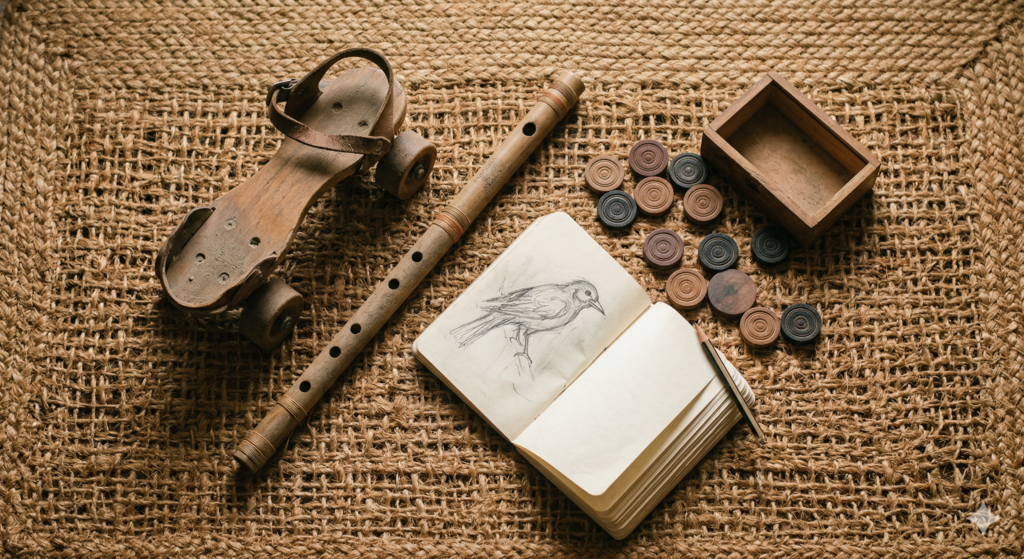
I realised this late. But as a father, I made a quiet decision—not to repeat the same pattern.
Today, my elder daughter is at that stage. She sees her friends learning everything—singing, dancing, swimming, skating—and naturally, she wants to join them all.
This time, I chose differently.
I told her “No”—not from rejection, but from responsibility.
I told her, “I will support you. But first, I want to understand you.”
Instead of reacting to comparison, I am choosing to observe something deeper: the point where her natural ability meets her genuine interest.
And once we find it, we stay—not for variety, but for growth.
The Wisdom of Arjuna: The Power of One Focus
Our ancient wisdom has already addressed this.
In the Mahabharata, Guru Drona tested his students by placing a wooden bird on a tree. He asked each of them what they could see.
Most answered, “I see the tree, the branches, and the bird.”
They saw everything.
Then came Arjuna. His answer was simple:
“I see only the eye of the bird.”
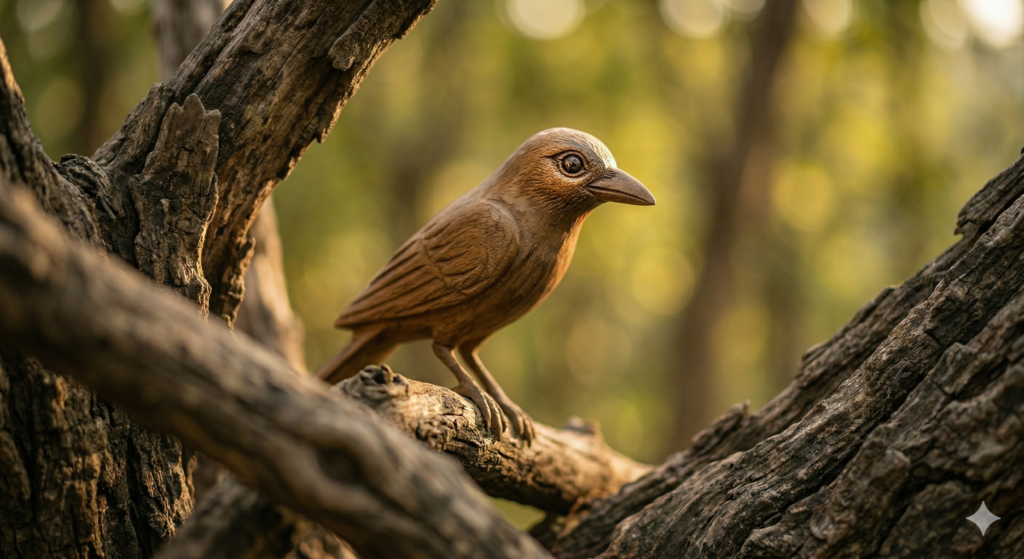
That focus made all the difference.
By saying “No” to everything else, Arjuna became capable of hitting the target with precision.
Today, however, many children are trained to see everything—multiple classes, multiple skills, multiple directions—but no clear aim.
In the process, we may be preventing them from ever finding their own “bird’s eye.”
The Hidden Cost of Too Many Activities
We often believe that more exposure leads to more development.
But reality tells a different story.
When a child is involved in too many activities without depth, they don’t develop mastery—they develop fragmentation.
Without realizing it, we are training them to:
- Start easily and leave quickly
- Get excited, but lose interest faster
- Avoid difficulty instead of working through it
They don’t build passion; they build a habit of distraction.
They don’t build patience; they develop a need for constant stimulation.
They don’t build mastery; they learn how to escape when things become hard.
Focus Over Comparison
Children will naturally compare themselves with others. That is part of growing up.
But as parents, we don’t have to participate in that comparison.
Just because another child is enrolled in multiple classes does not mean your child is falling behind. In fact, a child who stays committed to one thing learns something far more valuable.
They learn discipline, resilience, and the joy of slow, steady improvement.
Most importantly, they gain confidence—not from variety, but from progress.
What You Can Do Today
1. Stop the Shuffling
If your child frequently switches activities, they are learning how to quit—not how to grow.
2. Observe, Don’t React
Don’t enroll your child based on what others are doing. Pay attention to what they naturally return to during free time.
3. Commit to Less, Go Deeper
Choose one or two activities at most, and give them enough time to develop.
4. Allow Boredom
Unstructured time is not harmful. In fact, boredom often becomes the starting point for creativity and self-discovery.
Final Thought
Childhood is not meant to be filled—it is meant to be discovered.
If we keep filling their time with activities, they may never get the chance to understand themselves.
Let us not raise children who try everything but understand nothing.
Let us help them find their “bird’s eye.”
Growing with you,
Satish
Annayya,
Really good, i am also thinking like that only about my daughter…
I am waiting her to complete 3 years after that thinking to join her any activity mainly Kara samu because we’re interested in it.
After reading your blog I am also learning so much about parenthood.
Now when I want to do anything to my daughter everytime I remembered ever one of your words.
And i will definitely implement in my parent hood life ….
Thank you so much for sharing , make us realise and not to make us repeat the same mistakes.
Each and every word in your blog is absolutely true ❣️.