

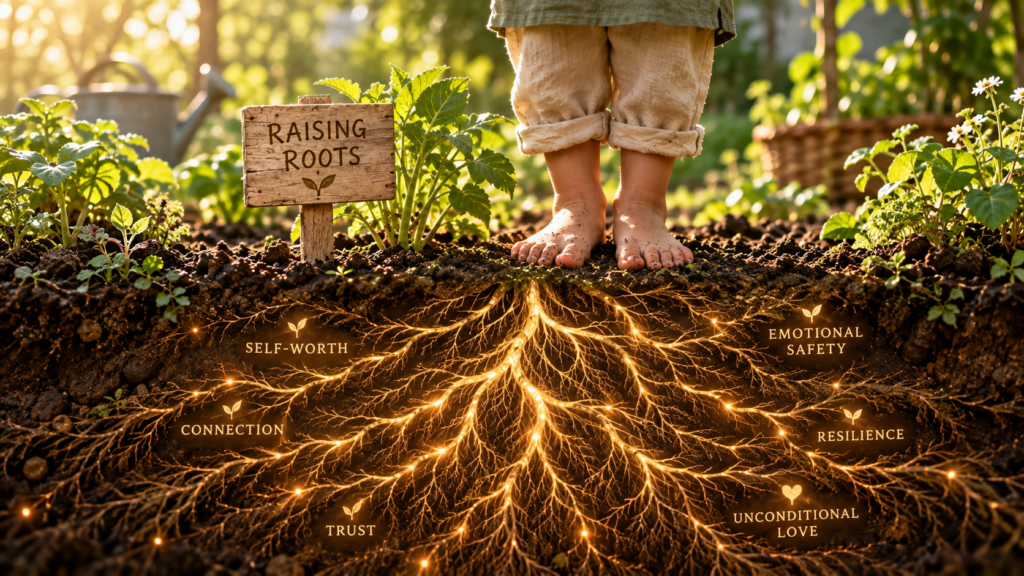
The most devastating wounds in childhood almost never leave a bruise.
Every single day, we run hundreds of routines on pure automation. You don’t deliberately coach your fingers to button your shirt, measure out coffee grounds, or guide your car through morning traffic. The brain forms silent neural grooves—autopilot highways designed to save energy so we can survive the rush of daily life.
Automation is an evolutionary triumph for everyday mechanics.
Until that exact same autopilot takes the wheel of our parenting.
When we operate on unconscious habit, parenting ceases to be a relationship. It turns into an automated management loop. We rush, referee, scold, and herd our children through schedules like air traffic controllers trying to avoid delays. On the surface, the daily gears keep turning: homework gets finished, clothes are cleaned, dinners are eaten, and bedtime is met.
Yet underneath that functional exterior, an invisible erosion is quietly taking place. Unconscious parenting doesn’t break a child with a single catastrophic blow. It fractures them across thousands of ordinary, unexamined micro-interactions—quietly carving out self-worth, wiring chronic anxiety into the nervous system, and shaping how a child comes to see their own place in the world.
The Subtle Anatomy of Micro-Erosion
We tend to measure parental harm by extreme, unmistakable events: severe neglect, physical abuse, or traumatic upheaval. Because our homes may be peaceful and comfortable, we assure ourselves: Everything is fine. My children are fed, safe, and loved.
However, a child’s inner architecture isn’t built only during major life crises. It is assembled in the ordinary sixty-second exchanges that repeat day after day. In these seemingly trivial moments, unconscious habits leave indelible imprints.
1. The Heavy Sigh and the Habitual Scowl
Consider the simple spill. A six-year-old reaches across the breakfast table, their small hand clips a full glass, and milk cascades over the counter, dripping onto the floor.
A parent operating on unconscious stress doesn’t see an undeveloped motor skill in progress. They see one more chore added to an already frantic morning. The reaction is instantaneous: an exasperated gasp, shoulders tensing, a sharp click of the tongue, and an irritable snap: “Why can’t you ever pay attention? Look at this mess!”
The cleanup takes ninety seconds. The incident is forgotten by the adult in two minutes.
Inside the child, however, the nervous system registers a much heavier lesson: Mistakes trigger panic. My clumsiness threatens the emotional stability of this house. When things go wrong, I am a burden.
Repeated over hundreds of spilled cups, misplaced shoes, and forgotten jackets, that quick burst of irritation calcifies into a permanent hyper-vigilance. The child begins unconsciously scanning adults for slight shifts in facial expression, bracing for the next flash of disapproval.
2. The Dismissive “Uh-huh” and Chronic Invisibility
Children speak to us constantly. They talk about caterpillars on the sidewalk, a drawing they spent twenty minutes coloring, or an elaborate game invented at recess.
When parents run on autopilot, exhaustion leads to functional presence: our eyes remain glued to glowing screens, our fingers continue tapping out replies, and we toss out half-hearted filler words: “That’s nice, sweetheart,” or “Not right now, go play.”
To an adult, it’s just multitasking. We simply wanted five minutes of quiet after a punishing workday.
To a child whose sense of identity is tethered to the mirror of their parents’ attention, the message is visceral: The screen holds your gaze; I do not. What excites me is irrelevant to you. To be worthy of your real presence, I need to be bigger, louder, or perform better.
Chronic emotional unavailability does not feel like mild boredom to a child; it registers as low-grade abandonment. Over time, children stop sharing the small things. And when the small things are cut off, they will never return to share the big things when life becomes difficult.
3. The Weaponized Comparison
Unconscious parenting relies on convenience tools to force immediate behavioral compliance. Comparison is one of the most common:
“Look at how neatly your sister eats.”
“Why can’t you just sit and study like your cousin does?”
It slips out effortlessly because it was likely weaponized against us when we were growing up. We tell ourselves it motivates them to do better.
In reality, comparison doesn’t inspire excellence; it poisons self-concept. The micro-message absorbed by the child is: Who I am naturally is unacceptable. Love and appreciation are scarce resources that must be won by outperforming others.
It plants the seeds of adult impostor syndrome, jealousy, and the relentless need to compare salaries, possessions, and accomplishments against everyone else just to feel safe.
4. Silencing Big Emotions to Protect Parental Peace
When a child weeps uncontrollably over a broken toy or throws a tantrum on the living room rug, an unconscious parent treats the noise as a disruption to be shut down immediately:
- “Stop crying right now, it’s not a big deal.”
- “Go to your room until you can fix your face.”
- “Big boys don’t cry over silly things.”
When we forbid tears or banish emotional storms because they make us uncomfortable, we teach our children emotional alienation. The child learns: My sadness is inconvenient. My anger is dangerous. If I want connection, I must swallow my truth and present a polite mask.
Years later, that child grows into an adult who cannot identify their own feelings, who suffers from chronic people-pleasing, or who numbs internal turmoil with compulsive work, isolation, or anxiety.
How Unconscious Reactions Shape Biology and Belief
A child does not come into this world with an innate blueprint of their worth. Their entire psychological mirror is held up by their primary caregivers.
When parenting happens without presence, the child’s developing brain internalizes our knee-jerk reactions not as a reflection of our temporary stress, but as an absolute truth about their fundamental value.
Children are exceptional observers, but terrible interpreters.
They notice every subtle change in our posture, the tone behind our words, and the distance in our eyes. But because their minds are developmentally egocentric, they invariably conclude: It must be because of me.
- If a parent is constantly stressed, the child believes: I am stressful to be around.
- If a parent only smiles when grades are flawless, the child believes: My worth is conditional on achievement.
- If a parent explodes over small inconveniences, the child believes: The world is unsafe, and love can withdraw at any moment.
This is how generational patterns silently perpetuate themselves. We unconsciously hand down the very anxieties, emotional silences, and reactivity that were passed to us, convinced that because we are providing food, shelter, and comfort, no harm is taking place.
Waking Up to the Roots
This is the entire reason Raising Roots exists.
It is a quiet, steady call to disrupt the autopilot before these micro-damages harden into lifelong protective armor.
Conscious parenting is not about adopting a pristine persona where you speak in whispered monotones and never feel overwhelmed. It is not about eliminating every conflict, avoiding every frustration, or indulging every whim. That is a fantasy that only creates guilt.
Consciousness simply means interrupting the reflex.
It is the courage to pause for a single breath between being triggered and choosing a response:
- Catching yourself right before the sarcastic remark leaves your lips and choosing silence instead.
- Noticing your thumb mindlessly scrolling, pocketing the phone, and looking straight into your child’s eyes while they finish their story.
- Recognizing that a child’s messy tears are not a challenge to your authority, but a cry for a calm, grounded anchor in the storm.
- Having the humility, when you do lose your temper, to kneel down to their eye level and repair the rupture: “I was angry, and I shouted. That was not okay. It wasn’t your fault, and I am working on keeping my cool.”
That simple act of sincere repair completely rewrites the story in a child’s mind. It teaches them that love is durable, that relationships survive mistakes, and that adults can be accountable.
Nourishing What Lies Beneath
We cannot afford to leave the inner landscape of our children to chance.
Every single word, every reaction, every glance, and every deliberate pause is planting something in the quiet soil of their developing identity. We are constantly tending roots—whether we mean to or not.
We can cultivate shallow, fragile roots woven from fear, conditional approval, and emotional disconnection.
Or we can intentionally nurture deep, resilient roots grounded in presence, emotional safety, and unwavering acceptance.
Children will not stay small for long. One day, they will pack their bags and step out into an unpredictable, demanding world. When life tests them, their ability to stand firm will not be determined by how many activities we scheduled or how well we managed the logistics of their childhood.
It will depend entirely on the roots we quietly nurtured beneath the surface when nobody else was watching.
🌱 Raise consciously. Raise intentionally. Raise Roots.


Wow… really impressed Annayya….. actually in really life unknowingly we are also doing it…after I read it i checked myself….yes I m also doing same thing… thank you for waking me up from that drama…. thank you Annayya…..i will definitely remember and i watch my actions and words with my kid…… thank you for the vlog…..
Because of life pressure so many times I am also lossing my patience on my kid….. thank for reminding us…