
Last Sunday evening, something unexpected happened.
There was a power cut.
The television went silent. The Wi-Fi stopped working. The usual background noise of modern life disappeared. For a few minutes, my daughter wandered around the house, unsure of what to do.
Then she walked outside.
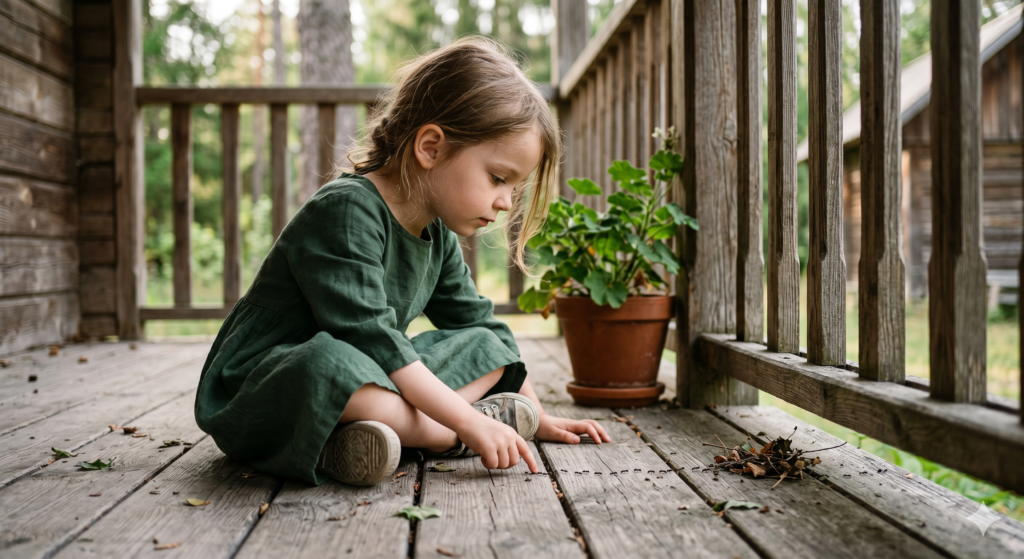
She sat on the balcony and watched a line of ants carrying tiny pieces of food. For nearly twenty minutes, she simply observed them. Soon, questions began to appear.
“Where are they taking the food?”
“Do ants have families?”
“How do they know where to go?”
No one was teaching her. No worksheet was guiding her. No educational video explained anything. Yet learning was happening.
And it reminded me of something we are quietly losing in modern childhood: the gift of silence.
When Did Childhood Become So Full?
A few generations ago, boredom was a normal part of childhood. Children spent long afternoons watching clouds drift across the sky. They climbed trees, explored empty fields, built imaginary worlds, and created games out of almost nothing. No one worried about keeping them constantly entertained. No one felt responsible for filling every empty moment.
Today, childhood often looks different. The moment a child says, “I’m bored,” we feel pressure to solve the problem.
- We offer a screen.
- We suggest an activity.
- We arranged another class.
- We fill the silence.
Without realizing it, we have started treating boredom as an enemy. But what if boredom was never the problem? What if it was the beginning of something important?
Silence Is Not Empty

When we hear the word silence, we usually think about the absence of noise. But true silence is much deeper than that.
- Silence is not simply a quiet room.
- Silence is freedom from constant stimulation.
A child sitting under a tree watching birds is experiencing silence. A child sitting in a quiet room while endlessly consuming content is not.
Silence is the space where the mind finally has room to wander. It is where questions are born. It is where imagination awakens. It is where curiosity begins to grow. Just as a seed needs darkness before it can sprout, a child needs moments of silence before deeper learning can take root.
The Hidden Cost of Constant Stimulation
Think about a typical day for many children:
School –> Homework –> Activities –> Entertainment –> Notifications –> Videos –> Games –> More entertainment before bed.
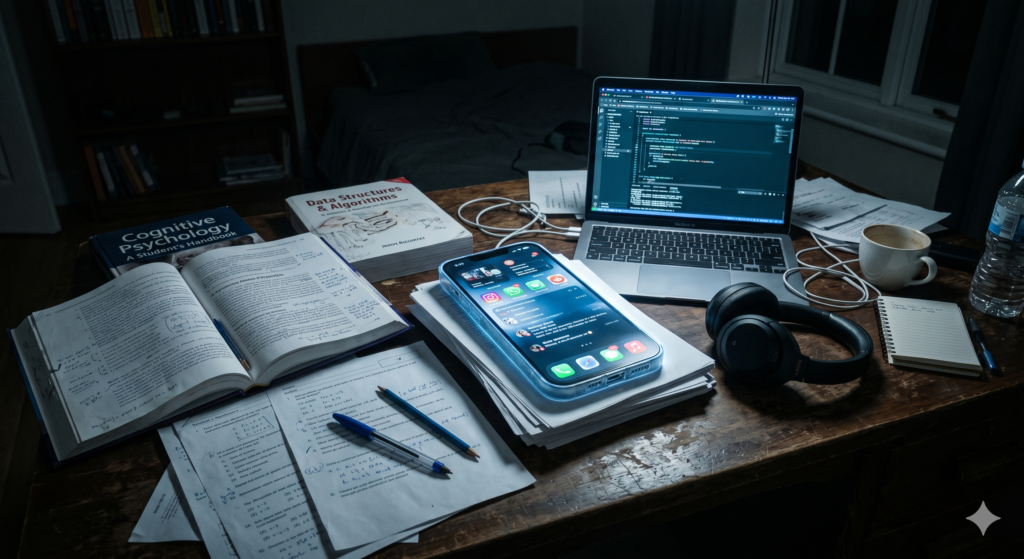
The modern child is surrounded by information from morning until night. The mind is constantly receiving. Rarely does it get a chance to simply be. Every space is filled before it has an opportunity to become meaningful.
Yet some of the most important qualities we hope to develop in our children grow only in these spaces:
- Curiosity
- Creativity
- Observation
- Patience
- Reflection
These qualities do not flourish in crowded minds. They flourish in quiet ones.
Why Boredom Is a Gift
Many parents see boredom as a sign that something is missing. But boredom is often where creativity begins. When children have nothing to do, their minds start creating.
- A stick becomes a sword.
- A cardboard box becomes a castle.
- A garden becomes an unexplored jungle.
- A simple question becomes an adventure.
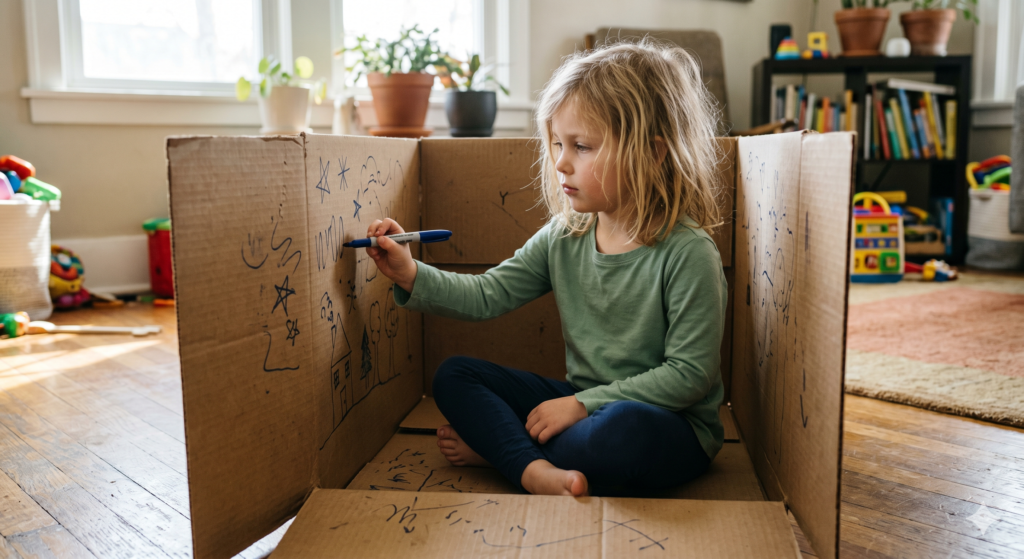
Without boredom, imagination has very little work to do. Without silence, creativity has very little room to grow.
The goal is not to remove technology from childhood. The goal is to make sure technology does not replace the valuable work that boredom was designed to do.
What Ancient Wisdom Understood
Long before researchers studied attention and child development, ancient traditions understood something important: Growth requires stillness.
In the Indian tradition, silence—Mauna—was never considered empty. It was considered powerful. Students in Gurukuls spent time observing nature, reflecting on their experiences, and learning to pay attention.
Education was not merely about collecting information. It was about developing awareness. Today, information is abundant. Attention is scarce. And perhaps attention is the foundation upon which all meaningful learning is built.
What Children Really Need
Children do not need every minute planned. They do not need constant entertainment. They do not need a childhood packed with endless activities.
What they need is space.
- Space to notice.
- Space to wonder.
- Space to question.
- Space to discover.
- Space to meet themselves.
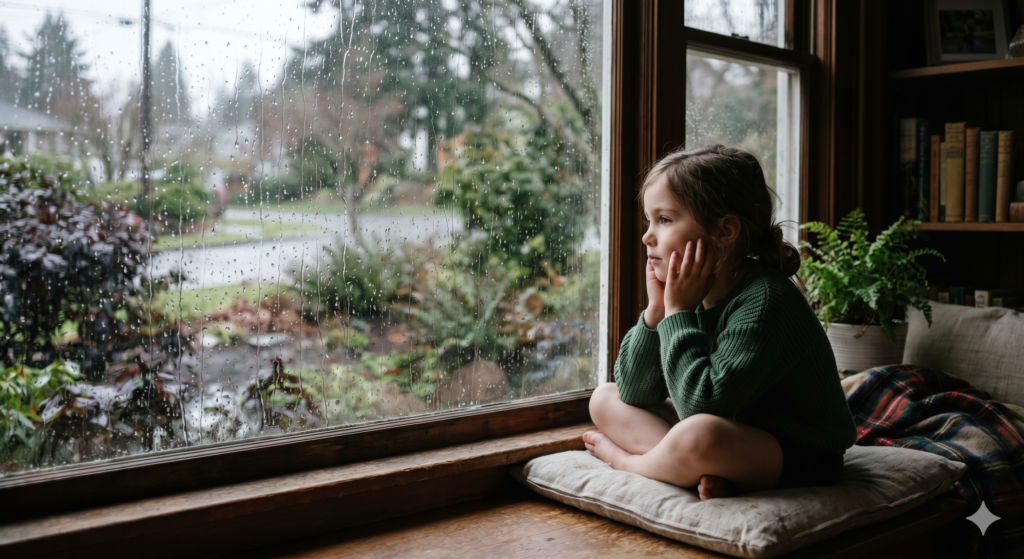
This may be one of the most overlooked needs of modern childhood. Because before children learn about the world, they first need opportunities to understand their own thoughts, interests, and feelings. That understanding grows in silence.
What Happens When Children Never Meet Themselves?
A child who is constantly entertained learns to pay attention to the outside world. But a child who occasionally sits in silence learns to pay attention to the inside world.
They begin to notice what excites them. What makes them curious? What makes them uncomfortable? What questions keep returning to their mind.
This is where self-discovery begins. Not through lessons, achievements, rewards, or report cards—but through quiet moments of observation.
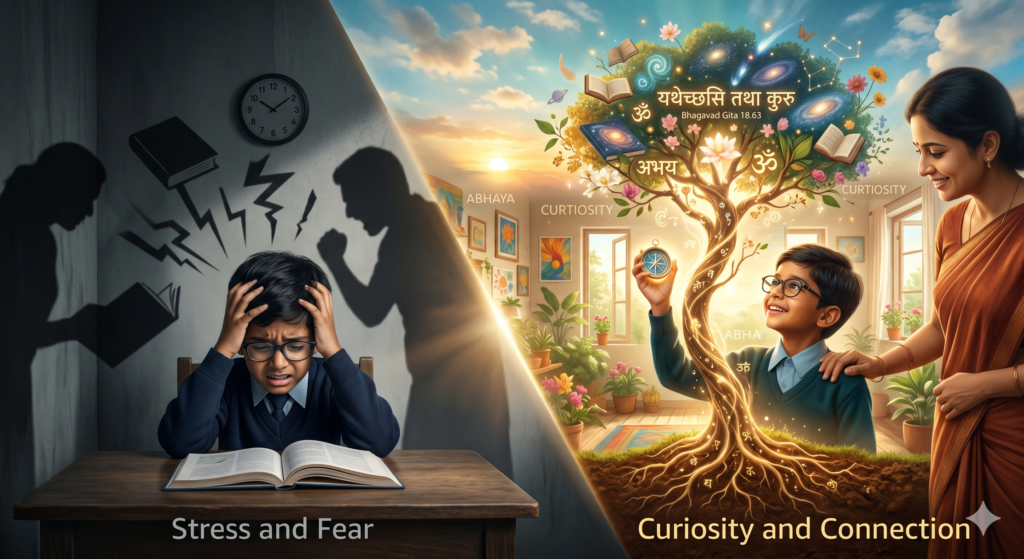
Many of us spend our adult lives trying to answer a simple question: “Who am I?” Perhaps that journey should not begin at thirty or forty. Perhaps it should begin in childhood. When children are given space to sit with their thoughts, they slowly develop an inner compass. A sense of who they are beyond marks, talents, trophies, and expectations. And that inner compass may be one of the greatest gifts a parent can help nurture.
Planting the Seeds of Silence
The good news is that silence does not require a major lifestyle change. It can begin with small moments:
- Take a walk without devices.
- Sit outside and watch the sunset together.
- Allow a car ride without screens or music.
- When your child says, “I’m bored,” resist the urge to immediately solve the problem. Give boredom a little time. Allow imagination an opportunity to arrive.
At first, children may feel uncomfortable. We all do. But gradually, something beautiful begins to happen. They start noticing things they never noticed before. They ask deeper questions. They invent new games. They become comfortable with their own thoughts. And in those quiet moments, they begin to discover who they are.
A Final Thought
As parents, we often ask ourselves: “What should I teach my child?”
We search for better schools. We look for better books. We enroll them in better classes. And while all of these things have value, perhaps there is another question worth asking:
“What spaces am I protecting for my child?”
Spaces where there is no performance. No achievement. No instruction. No entertainment. Only wonder. Only observation. Only the freedom to be.
Because not all growth happens when children are learning something new. Some of the most important growth happens when children are learning about themselves. It happens while watching the rain. It happens while following a trail of ants. It happens while staring at clouds drifting across the sky.
Moments that appear ordinary often shape extraordinary lives. Roots do not grow in noise. They grow in stillness. And perhaps what childhood needs most today is not more stimulation, but more space for those roots to grow.
Reflection for Parents
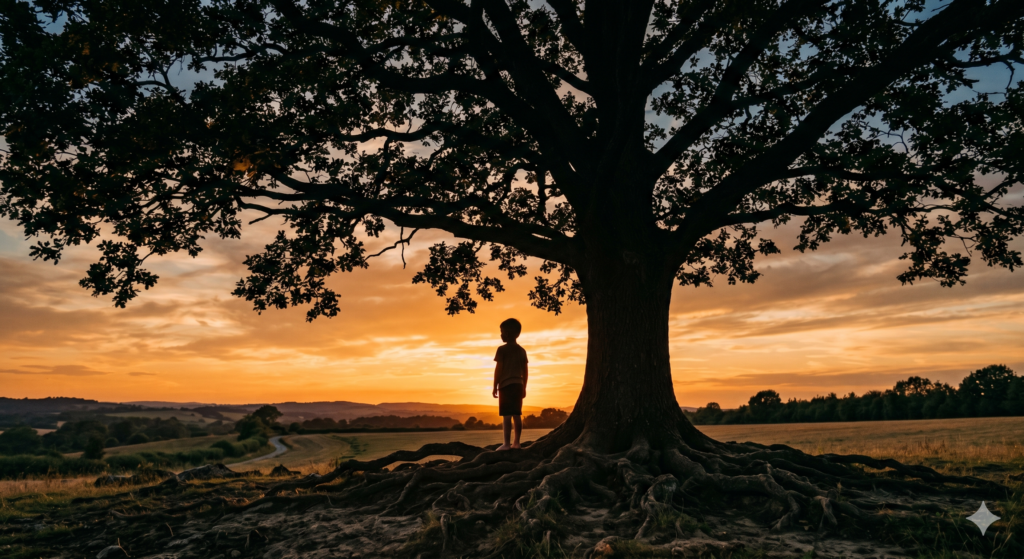
- When was the last time your child experienced an unhurried moment of silence? Not a moment filled with instructions, entertainment, or activities. Just a moment to observe, wonder, and simply be.
- And perhaps an even deeper question: What spaces are you protecting in your child’s life for them to discover who they are?